Walks: more than just exercise
 Sue Watkins
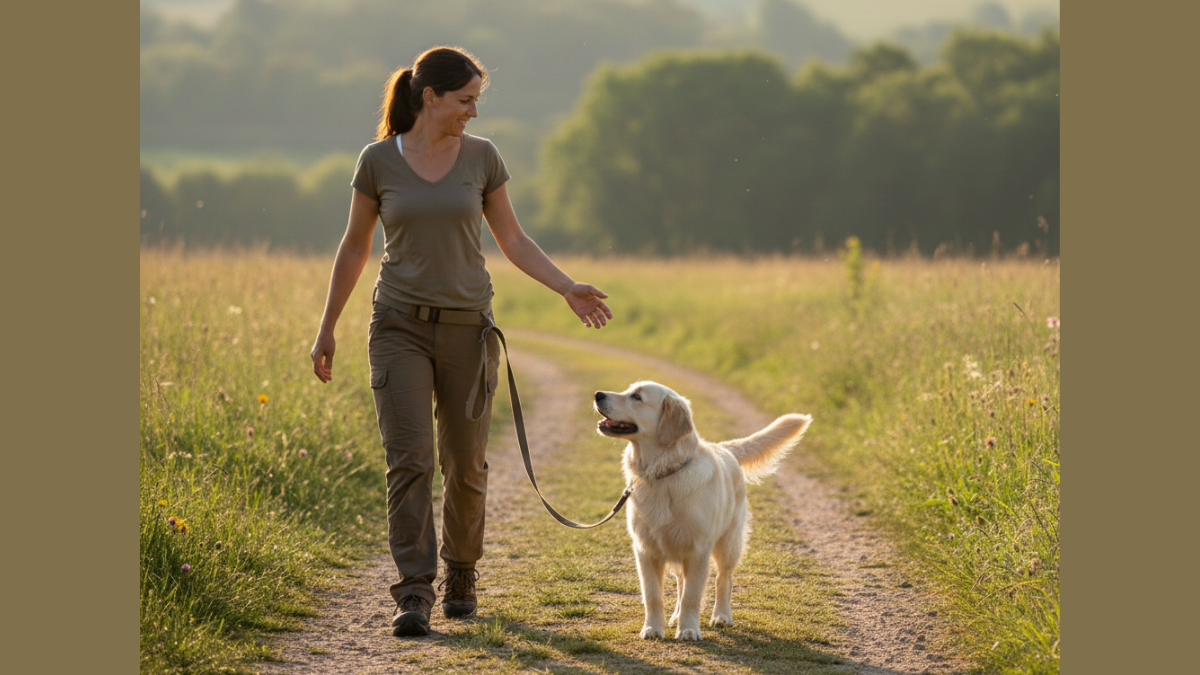
Walks should be your sanity time, not a daily battle. Put the training in early and you avoid a lifetime of stressful, hard work on the lead.
Walks: more than just exercise
Walks are often viewed as something we simply do with our dogs – a chance to stretch their legs and tick the exercise box. In reality, every walk is a powerful training session whether we intend it to be or not.
Young dogs are constantly taking in information. The environment, the lead, other dogs, people, wildlife and smells are all shaping how they respond in the future. If a dog practises pulling, forging ahead, ignoring cues or becoming overwhelmed on every outing, those behaviours are being reinforced daily.
Training on walks does not mean removing freedom or enjoyment. It means being thoughtful about where you walk, how long you stay out, and what your dog is capable of coping with at that moment in time. Calm, connected walks are built through structure, not chance.
The myth of “they’ll grow out of it”
One of the most common things I hear is, “They’re young, they’ll grow out of it.” Sometimes maturity helps, but more often behaviours simply become more ingrained. A large adolescent dog that has never learned to walk calmly on a lead doesn’t magically decide to do so at two years old.
By investing time early – teaching loose lead walking, focus, recall and the ability to disengage from distractions – you are setting patterns that will last a lifetime.
Short-term sacrifice, long-term gain
One of the biggest sticking points for owners is the idea of freedom. We worry that training means restriction – fewer walks, less exploration, less fun. In reality, it is often the absence of training that limits freedom long term.
Yes, early training can feel like hard work. It may mean:
- Shorter, more purposeful walks
- Choosing quieter environments
- Repeating familiar routes
- Pausing often to reinforce calm choices
- Prioritising quality over distance
This is not about denying your dog enjoyment. It is about giving them the skills to cope with the world. Dogs that understand how to walk calmly on a lead, respond to cues and regulate their arousal earn more freedom over time, not less.
Sanity comes from clarity
Dogs – whether pet dogs or those destined for the shooting field – thrive on clarity. Clear cues, consistent handling and realistic expectations help dogs understand their role and reduce frustration.
For working and gundog breeds in particular, the environment is highly stimulating. Without guidance, walks can quickly turn into uncontrolled hunting, pulling or scanning the horizon for excitement. Building calm connection on the lead is not the opposite of working drive – it is the foundation that allows it to be used appropriately later on.
When training is woven into everyday walks, dogs learn when to switch on and when to switch off. That balance is what creates genuinely enjoyable walks.
Final thoughts
Your walks should refill your cup, not empty it. If that means sacrificing a little freedom in the short term to support your young dog’s learning, it is time well spent. Train the dog you have today, and you build the foundation for a lifetime of calmer, more connected walks.
If you are struggling with walks, lead pulling or general over-excitement, especially with a young or adolescent dog, a few focused one-to-one sessions can make a significant difference. Individual training allows us to work at your dog’s pace, in the environments that matter most to you, and set both of you up for long-term success.