🐾 WEEK 9 🐶 Week 8: Teenage Gundogs – Working in the Moment 🐶
 Sue Watkins
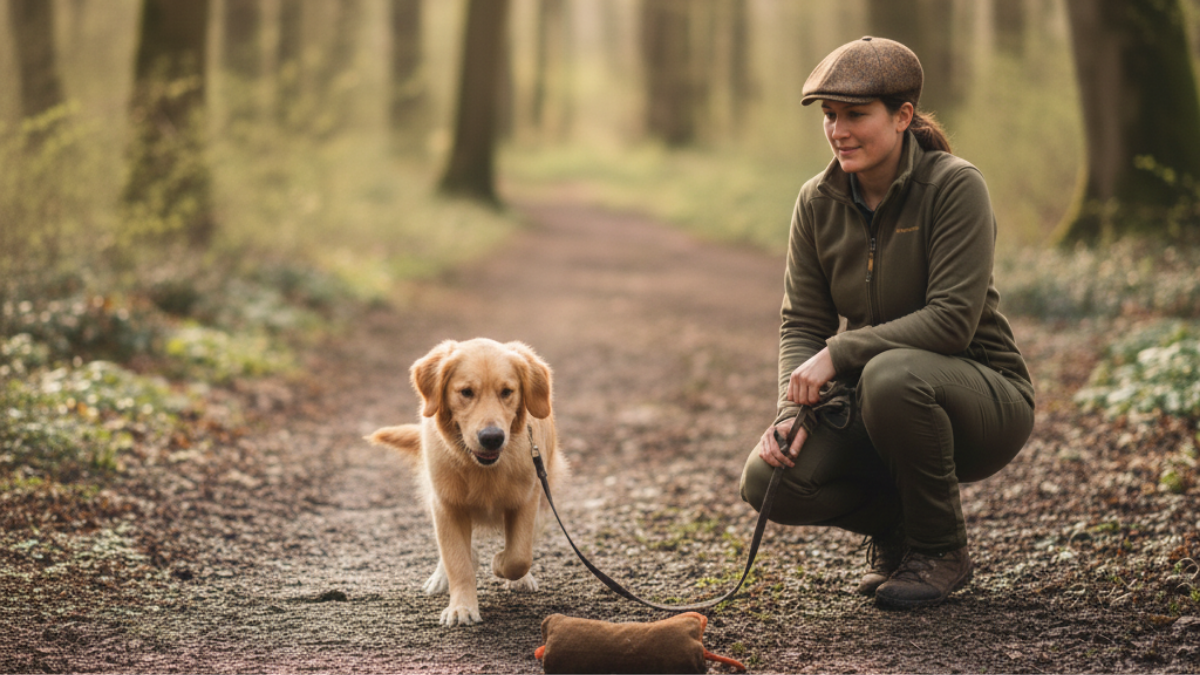
For dogs like Griff at 19 months, it’s important to remember: this isn’t about reviewing past learning or expecting future potential.
Teenage Gundogs – Navigating the Adolescent Dip
If your once-obedient youngster has suddenly “forgotten” every cue you’ve taught them, you’re not alone — you’ve entered the adolescent phase. Between roughly 8–24 months, young gundogs go through major hormonal, cognitive, and emotional changes. This period can feel chaotic, but it’s a natural stage of development.
For dogs like Griff at 19 months, it’s important to remember: this isn’t about reviewing past learning or expecting future potential — it’s very much about what the dog is doing right now, in the moment. Training must respond to the dog you have today.
Understanding the Adolescent Phase
During adolescence, you may see:
-
Inconsistent responses to cues
-
Increased independence and exploration
-
“Selective hearing” or sudden disobedience
-
Impulsivity, excitement, or over-arousal
-
Reduced tolerance for frustration
This isn’t stubbornness — it’s normal development. Your role is to adapt your expectations and support your dog through this change, rather than pushing for perfection.
Why Adjusting Expectations Matters
The phrase I always come back to is:
➡️ Work with the dog you have at that moment, not the dog you had yesterday or the dog you will have tomorrow.
For adolescent dogs, learning is in the present, not in the past or future. Some days your dog might deliver beautifully; other days they seem to have forgotten everything. Both are normal.
During this stage we must:
-
Reduce pressure
-
Lower criteria for success
-
Reinforce heavily for small wins
-
Keep sessions short
-
Avoid comparisons to past performance
Think of adolescence as maintenance mode, not mastery mode — the goal is steady support, not perfection.
Supportive Training for Teenagers
Here’s what helps your adolescent gundog thrive:
1. Short, positive bursts of training
Two minutes of consistent success is better than twenty minutes of frustration.
2. Movement-based learning
Hunting games, heelwork, and simple memory retrieves provide structure without overloading their brain.
3. Calm cue reinforcement
Revisit basic sits, waits, and recalls in low-distraction areas before gradually increasing difficulty.
4. Controlled freedom
Use long lines or safe open spaces so the dog can explore while remaining under supervision.
5. Emotional regulation
Teach calmness as a behaviour: settle on a mat, chew slowly, or pause calmly after excitement.
Griff’s Example
At 19 months, Griff often “forgets” basic cues like sit, stay, or heelwork. Some sessions are brilliant; others feel chaotic. The key isn’t scolding or pushing harder — it’s meeting him where he is in that moment and supporting him calmly.
By doing this, you help the dog maintain confidence and develop independence, steadiness, and emotional resilience.
The Gift of the Adolescent Phase
Adolescence teaches both handler and dog:
-
Patience
-
Flexibility
-
Humour
-
Perspective
Your dog learns:
-
Emotional regulation
-
Resilience
-
That training is predictable, safe, and positive
The teenage phase isn’t a setback — it’s an opportunity to strengthen your partnership and set the foundation for confident adult gundog behaviour.